Friday, November 10, 2017

For Your Young Architects...Construction Toys for All Ages

Building toys are great for a variety of reasons.  They are one of the things that I tell parents to splurge on because good building sets will last forever.  When my daughter was younger, I discovered that she and my husband loved to build and create things so I went out and bought a few sets of building toys.  To this day, her Magna-Tiles are still out and used all the time by her and her friends on play dates.  They continue to be worth every penny I paid!

One of the biggest benefits of building toys is the opportunity to offer open-ended play experiences for kids.  Open-ended play is crucial for the development of imagination and creativity in children of all ages.  Through open ended play, kids can develop a variety of social and emotional skills such as empathy, cooperation, problem solving, and improved self-confidence and self-esteem.  There are also a number of cognitive benefits of open ended play including working memory, self-regulation, organizational skills and so much more. While all of the building sets I recommend come with suggestions and visual directions, they can also use their imagination and build whatever they want.  Another thing I like about building toys is that they can be done by a single child or can be done with a group of kids, which is great for working on improving teamwork and other social skills.

In addition to working on all that I have previously mentioned, building toys are great for working on improving bilateral coordination, increases grasp strength and manipulation skills.  If children follow visual directions while building, they are also good for working on improving visual motor and perceptual skills.

Tegu-these continue to be one of my favorite construction toys since I discovered them.  These wooden blocks have magnets built in so they can stick together.  Since they stick together so easily, they are great for children who may present with decreased grasp or upper extremity strength or have difficulty with bilateral coordination due to physical limitations.  Tegu blocks come in a variety of color-waves and each set comes with a variety of different shapes.  In the last couple of years, they have begun offering kits that you can make different vehicles, monsters, robots and smaller travel packs that are perfect for throwing in your bag to keep kids entertained in the car, at a restaurant or while waiting in waiting rooms.  One of the things that I love is that because they are magnetic, they can stick to any metal surface like a refrigerator so you can work on building upper extremity strength at the same time as creating.

The Offbits-I had been on the lookout for construction sets that would be more motivating and
challenging for the older children on my caseload.  I wanted something they could build by following visual directions or could just use their imagination to build things.  I was excited to discover The Offbits while on the Fat Brain toys and they have become a big hit with the older kids on my caseload.  Using a variety of spare parts (nuts, bolts, screws, springs, etc.), children can build robots and vehicles.  Each set comes with an instruction manual with a handful of ideas and directions or kids can use the bits and pieces to make whatever they want.  They come with mini tools which are great for working on improving fine motor skills such as strength and manipulation skills.

Plus Plus-I was originally drawn towards Plus-Plus Mini pieces because of their bright colors and convenient packaging (the tubes were just perfect to throw in my bag and keep my daughter entertained when we were on the go).  Once I started using them, I realized what a great tool they were for reaching occupational therapy goals.  In addition to being an awesome open ended building toy to work on improving creativity, they were ideal for working on improving fine motor skills such as grasping, strengthening and bilateral coordination and for working on visual motor and perceptual skills.  Kids can follow the visuals provided with each set to build something or can use their imagination and create whatever comes to mind.  For younger children, be sure to check out the Plus-Plus Midi pieces.


Timber Planks-sometimes kids need opportunities to build and create without any rules....to have an opportunity to play where there is no right or wrong to what they are doing. Timber Planks are perfect for this.  This set comes with 300 planks (270 natural wood and 30 bright orange) that kids can stack and arrange to create large structures.  Not only is this a great toy to work on increasing creativity and imaginative play,  it is great for working on improving fine motor skills, visual-motor and perceptual skills and improving focus, attention and organizational skills.  Kids can play with them on their own or can be used in groups.

Build & Imagine Building Sets-I've been a long time fan of Magna-Tiles and they make my list every year but this year, I have become obsessed with the Build & Imagine building sets.  Instead of colored tiles, the Build and Imagine sets are made up of tiles with pictures that when put together create a castle, a pet portrait studio and many other things.  In addition to the tiles, each set includes a bunch of magnets to add details to the tiles and dolls that can be dressed and played with.  Kids can work on so many skills when  playing with the Build & Imagine sets including developing fine motor and manipulation skills, improving spatial awareness, hand-eye coordination and visual motor and perceptual skills.  At the same time, kids are offered an open-ended play experience that builds creativity and imagination skills.  My speech therapist friends love how kids can work on improving their language skills and work on storytelling skills when playing with them.

Natural Building Blocks (Waldorf Construction Toy)-one of my daughters favorite playgrounds in Brooklyn is found in Prospect Park.  It's a natural playground that has been built using fallen trees.  When my friend Heather from Hope Learning Toys showed me these natural birch and oak building blocks, I immediately thought of them and how much kids enjoy playing and building when out in nature.  Now with this all natural open-ended building set, kids work on building imagination and creativity skills as well as spatial awareness and hand-eye coordination.  The 30 piece set comes with a different sized blocks and opens young minds to create and construct.

Fort Boards-if you have a kid who loves to build forts, these are a great gift for them.  The sets come in a handful of colors and can be used indoors or outdoors to build. Fort Boards are large tiles that snap together and can be turned into structures that kids can play inside of.  We have been using Fort Boards with our kids at The Meeting House and the kids just can't get enough of them.  I love that while they invite kids to play together to create and build a fort....and what I have noticed is that the bigger the structure is, the happier the kids are!  Fort Boards are great for working on increasing grasp and upper extremity strength, improves spatial reasoning and hand-eye coordination, encourages creativity and imagination skills, and is a fun way to work on improving executive functioning skills such as focus/attention, planning and organizational skills.  

Groovy Blocks-these are bright colored plastic construction toys that come in a variety of shapes.  Each block has grooves on all four sides so pieces can slide together to build structures. Kids build by sliding the grooved pieces together; since they are connected, their structures are very sturdy which means they won't get knocked down which can cause a lot of frustration for the kids I work with.  In addition to encouraging creativity and imagination skills, Groovy Blocks are great for working on improving fine motor skills such as grasp strength and manipulation skills, improves bilateral coordination and works on spatial skills.  Additionally, they are great for working on problem solving and organizational skills.  Unlike a lot of construction toys, these are small and lightweight making them easy to throw in a bag and keep kids entertained when outside of the house.

Popoids-I discovered Popoids when on a mission to buy a bunch of birthday gifts and they have been one of my favorite finds of the year.  This open-ended construction toy encourages problem solving, organizational skills and creative thinking.  The set comes with 36 colored mini poptubes and 24 different shaped connectors that kids use to build and create.  The set comes with some suggestions on what to make but when I have my kids use them at work, I have them build whatever they want.  Popoids are great for working on a variety of occupational therapy goals such as improving grasp strength and manipulation skills, bilateral coordination and hand-eye coordination.

Click Blocks-this 100 piece set of natural wooden blocks comes with different colored and shaped blocks that invite kids to build and create.  These are something that your kids will play with for years and years and well worth the investment.  For many of the kids I work with, building with blocks can cause a lot of frustration because they may have decreased coordination and can easily knock down their creations.  The Click blocks are similar to Legos in the sense that they can be pushed together and stay together until you pull them apart.  In addition to being great for encouraging creativity and imagination, they are also great for working on increasing grasp strength and manipulation skills.  They also work on improving bilateral coordination, visual motor and perceptual skills and hand-eye coordination.

These are just a handful of the amazing construction sets that are out there.  Does your family have a a set that they love?  I would love to hear what kinds of sets other families or therapists/teachers use with their kids.  I am always a click away and love hearing from you all.


Wednesday, November 8, 2017

The Holiday Book Guide

In addition to being an occupational therapist, I also run a social skills group called The Meeting House Juniors.  We are a recreational based social skills program for children ages 4-7 years old who have a variety of social struggles.  While our number one goal is to make them feel more socially comfortable and prepare them for the increasingly more demanding social demands they may face as they get older, we also want them to enjoy coming.  This means that we have had to find fun ways to talk to them and work on social skills.

As I was trying to develop our curriculum this year, I decided that one of the most effective and fun ways would be to use picture books to teach our social skills lessons each week.  We used to end each session at TMH Juniors last year by reading a picture book and it the more I thought about it, the more I realized how much they looked forward to that time of the afternoon.  It also made me realize that younger children have a hard time being able to identify and recognise their own social deficits but with the right platform, they are able to recognize it in other people and the characters in books.  Using picture books in our group has been a great way to talk about different kinds of social emotional challenges that kids might face and can be a great way to brainstorm, problem solve and include parents in our process so that kids can be better prepared for a variety of challenging social situations.

Below, I share just a handful of the very extensive number of books that make up my personal and professional library.  What they all have in common is that they are beautifully written, have amazing illustrations and teach a life lesson that will help our children become more socially aware.


After The Fall (How Humpty Dumpty Got Back Up Again) by Dan Salent
We all know about Humpty Dumpty but do we know about what happened after he was finally put back together?  This is the story about Humpty Dumpty overcoming his fear of heights after taking that great big fall and building up the courage to climb the wall again.  So many of the kids I work with have giant fears and those fears may get in the way of them trying new things or doing things that they were once comfortable doing.  As they follow Humpty Dumpty through the story, they learn that sometimes it's not easy and we still may be a bit scared, but if we are brave and show courage, we end up overcoming our fears and doing great things.

Stick and Stone by Beth Ferry and Tom Lichtentheld
In this children's book the main theme is about bullying and being a good friend.  Stick and Stone are both feeling alone and sad until Stick comes upon Stone being picked on by a pine cone.  They become fast friends and spend all of their time together until Stick is blown away during a storm.  Stone won't stop searching for his best friend and they are eventually reunited.

Fair Is Fair by Sonny Varela and Peter Mahr
What parent or teacher hasn't heard the words "It's not fair!".  Whether it be about not getting a special treat for dessert or going to bed earlier than their older sibling, kids are always worried about things not being fair and even.  In this book, three animals in the zoo (elephant, giraffe and a bunny) don't understand or think it's fair that one animal gets more than the other two.  Kids learn about fairness and just because someone may get something you want or more of something, it doesn't mean that you aren't equally loved.

The Color Monster by Anna Llenas
Teaching children about emotions and feelings is an important lesson that helps them not only understand their own feelings, but gives them perspective about other people and how they might be feeling.  The Color Monster is a beautifully illustrated popup book that helps children learn about emotions by matching it with a color.  Kids love this interactive book and it is a great way for parents and younger children to talk about feelings and what they can do when they are feeling certain ways.

Be A Friend by Salina Yoon
This is one of my favorite and most recommended books, especially for children who feel different.  Dennis is an ordinary little boy who likes to express himself through miming.  He doesn't use his words to try and connect with his peers and because of that, he feels alone.  That is until he meets a little girl named Joy who accepts him for who he is and a beautiful friendship develops because of her willingness to be open-minded.  As more children are being integrated into mainstream classrooms, this book is a must for parents and classrooms to help children develop an open mind for children who are different than them and to not be scared of them.

We Are All Wonders by R.J. Palacio
One of my all time favorite books was the young adult novel Wonder so I was thrilled when I discovered that they released a picture book for younger children.  This book is a wonderful way to introduce kids to the importance of empathy and kindness.  We Are All Wonders is old from the perspective of Auggie, a young boy who was born with a variety of facial differences that has required countless surgeries which has kept him out of school.  He talks about how even though he looks different than other children, he does ordinary things and is much more like his peers than they think and how he wants them to see him for who he is and not how he looks.

The Smallest Girl in the Grade by Justin Roberts
In this book, the theme is about speaking up and making yourself heard.  Sally is the littlest girl in her whole class and nobody seems to notice her.  The thing is is that she notices everything, especially the kids who are bullying and getting bullied.  One day, Sally decides she just can't take watching the mean kids any more and says something and makes herself heard by standing up to the bullies in her school.  We all know a kid (or many!) who need to be encouraged to use their voice and either stick up for themselves or for others.  This book is an important read, especially for kids who need to learn about the importance of speaking up and making themselves heard, even when they don't think anyone will listen to them.

Pete The Cat: I love My White Shoes by James Dean
One of the biggest lessons we can teach our children is how to differentiate between little and big problems.  For most kids, when a something happens to them, it is the biggest problem that they will ever face. Pete the Cat shows us how to make the best out of a problem by not getting upset and just moving on. Many of the Pete the Cat books teach a similar lesson and because of the sing-song way the book is written, the kids can really get into reading with you.  In addition to working on size of the problems, Pete the Cat books are great for teaching kids about the importance of being a flexible thinker, especially when things don't go the way  you want them to. 


The Dot by Peter H. Reynolds
We all have children (either our own or ones that we work with) who are resistant to try new things, especially if they are fearful that they may not be as good as they would like to be at it.  In The Dot, children learn about the power of persistence and taking the a risk of trying something outside of their comfort zone.   Vashti is discouraged by an art project.  At the end of her class, all she has is a blank piece of paper; instead of being angry with her, her art teacher encourages her to just draw a dot and and sign her name on the paper.  When she arrives in the classroom next, she sees her picture hanging up for all to see.  That is all it took to encourage her to draw and paint more.  As her artistic abilities grow, so does her confidence and self-esteem.

Rude Cakes by Rowboat Watkins
One of the things that many parents, teachers and caregivers have to deal with is a child who is not always polite. In this book, kids can begin to learn about being polite and the importance of being kind to others with a tremendous amount of humor.  Rude cakes never say please or thank you, are known to take things that don't belong to them without asking.  He is known to be inconsiderate and ungrateful, bullies other sweets and disrespects his parents.  That is until he is taken to another land where Giant Cyclopses (who are silly but very polite) end up using rude cakes as a hat where he learns the importance of being kind and patient and is able to change his ways when he returns home.


Let's Get Along Books-this is a series I found that works on more specific social difficulties.  These short and engaging books focus on raising awareness for positive behaviors.  In this box set, kids will be introduced to a handful of students from Miss Clayton's classroom.  The illustrations are fun and the stories are easy for preschoolers (these are really targeted towards younger children/preschool age) to follow.  These are great books for any classroom setting as the issues that they focus on (being kind, sharing, working together and calming down) are things that come up all the time for children in all classrooms and schools!

So these are just a handful of the dozens and dozens of books that I recommend this holiday season.  I'm always adding to my book collection so if you have any books that you love or would recommend, please share them with me.  I know that my readers will also appreciate hearing any suggestions you might have.  If you have a child who has other social difficulties and would like some recommendations on books that might be good for your child, please don't hesitate reaching out to me....I am always a click away and LOVE being able to share my recommendations with everyone.

Monday, October 16, 2017

Bits and Pieces FTW!

I am sure we all have that website that just sucks you in and you can be hypnotized to buy just about anything.  For me, when I see an email or get a catalogue from Fat Brain Toys, I have to make a decision to look at the email and know that I will be spending money or just delete it immediately.  At the end of the summer, I got an email that I decided to open and I am so happy I did.  In it they featured The Offbits building toys and I was immediately obsessed.  It's easy for me to find toys and products for the younger kids on my caseload...the real challenge is finding things that will motivate my older kids who tend to give up or become bored faster.   When I read about The Offbits, I knew that my older kids were going to love them and that they would be a great way to work on a variety of their goals without it seeming like work.

The Offbits kits are made up of a variety of "bits and pieces" that you might find in the bottom of a junk drawer or in a tool box.  To clarify, each kit comes with various screws, nuts, bolts, springs, etc. that can be used to build robots, vehicles or whatever else your child's imagination can come up with.  Each kit comes with a book with instructions to build something specific but also provides challenges with the bits and pieces provided in the back of the book.  Once kids are confident in their building skills, you can provide them with a bunch of pieces and see what they con come up with.  Like I have already mentioned, there is no right or wrong which I find helps kids have more fun when building with the bits and pieces.  The greatest thing is seeing a child's confidence and self-esteem soar as they build something from nothing.  If your child does better with step-by-step instructions, you can check out The Offbits website and take a look at their challenge section.  Here they show off other people's creations and give picture step-by-step directions.  I'm a particular fan of the ones they have for the holidays including the adorable CupidBit below for Valentine's day (it also includes a printable set of wings).  

I have a 7 year old daughter and she has actually become my partner in crime in toy testing.  As she has gotten older, watching her play with different toys and products I pick up has given me an idea of how to better use them with the kids I work with who struggle with different things.  For example, if she is having difficulty for some reason, it gives me the opportunity to come up with ways to adapt it so my kids can be successful.  When my collection of The Offbits  arrived, she was immediately interested in playing and building with them.  I was psyched because I love it when she chooses to play, explore and build in place of watching tv or using the iPad.  What was even more fun was when my husband came home from work and sat down and joined in on the fun!  These have definitely turned into something our whole family enjoys.

One of the things I like the most about The Offbits kits are that while they come with specific instructions on what to build, they also encourage you to challenge yourself and make your own creation.  There is no right or wrong when it comes to playing with them.  It's about exploring the various pieces and creating something.  I have noticed that before my kids can build something on their own/without a visual template, they need to follow the visual directions first.  This gives them a foundation and understanding of what the different pieces do, how they fit together, etc..  The other thing I love about The Offbits kits is that they are small and easy to bring places to keep your kids busy.

Increase Grasp Strength/Improve Manipulation Skills-the bits and pieces provided are really small (which is why these are geared towards kids 6 and older) which is great for working on improving manipulation skills; I encourage the kids to pick up the pieces using their "pinchers".  There are mini screwdrivers and wrenches included with each set which provided kids which makes the kids really work those little muscles in their hands.  In order to complete their creations, kids are required to screw nuts and bolts together, screw tiny screws tight and push springs into places.  All of this helps to improve overall grasp strength which is important for being able to write for long periods of times, manipulate buttons/snaps/fasteners and lots of other things.

Improve Bilateral Coordination-so many of the kids I work with will only use their dominant hand for activities.  They require constant reminders from me to use two hands because it isn't something that comes naturally to them.  When building with The Offbits kits, it's virtually impossible to only use one hand in order to put your robots, vehicles or whatever you are making together.  One hand must hold a screw while turning a nut onto it or hold the creation while using the screwdriver or wrench.  The nice thing about this is that kids figure this out pretty quickly on their own because they just won't have success building if they don't use two hands.

Improve Visual Motor/Perceptual Skills-as I have already mentioned, each kit comes with step-by-step directions in order to build a robot or vehicle.  Often times, the kids I work with don't like to work on things that challenge them and many have difficulty with visual motor and perceptual activities.  The Offbits provide many opportutnies to work on this skill in a fun and motivating way.  Some of the visual skills that can be worked on are:  visual tracking-to follow the instructions; visual scanning-to find the bits and pieces needed for each step; visual figure ground-to locate the right piece in a pile of pieces for each step; visual discrimination-to find the right size and color piece in a busy working field.

Improve Executive Functioning Skills-as kids get older, finding fun ways to work on improving executive functioning skills gets more and more challenging.  The Offbits provides so many opportunities to work on this.  Some of the executive functioning skills that can be worked on are: initiation by figuring out what the first step of the activity is...what pieces they need first, etc.; planning what the goal of the activity is and setting a goal; organization-this is something many of my kids struggle with.  With The Offbits, I sometimes have the kids organize themselves by sorting the different bits and pieces into piles so that it is easier for them to grab what they need for each step.  I also talk to them about looking at and following the directions so they can be successful; emotional control-one of the things I have to work on with my older kids is being able to not get too frustrated during challenging activities.  Sometimes this means providing them with challenging activities so they can come up with strategies to work through the challenges.  Many of my kids refuse to ask for help, which is a great strategy during challenging tasks.

Improves Social Skills-while kids can build The Offbits sets on their own, it can be a great activity for kids to do together.  They can come up with a game plan before they begin to build and work together to either follow the visual instructions or come up with their own creation.  It may mean sharing the materials, being able to compromise about a plan and patiently wait for your turn when necessary.  Once the kids build and create, you can have them act out different scenarios (you can collaborate with children's team members to see if there are certain social things they struggle with that they can act out through their Offbit robots).

As you can see, The Offbits can be used to work on so many occupational therapy goals.  I love when I can find something that parents can do at home with their kids.  Even better, this is something that you can do with your children and all have fun.  Oftentimes, I suggest parents have their kids do some kind of "warm-up" activity with kids before they begin their homework to warm up their hands.  This could be a great way to get your kids organized and warm up their hands for their homework.

If you have ever used The Offbits or have something similar you like to play and build with, I would love to hear about them.  I am always a click away and love hearing from you all.


Friday, September 22, 2017

More Than Pen and Paper

As an occupational therapist for school age children, one of the things I work on a lot of the time is the development of age-appropriate  graphomotor skills (the combination of cognitive, perceptual and motor skills that lead to drawing and writing).  For most kids, this is a skill that they learn naturally and without much support required.  However, for some, this can be a really frustrating thing for some kids I work due to a variety of reasons.  For some, decreased grasp strength and manipulation skills makes it challenging for some kids to have the endurance to write for long periods of time.  Some kids may have visual motor and perceptual difficulties so they may have a hard time learning how to draw or learn how to write letters and numbers.  Then there are the children with learning challenges.

No matter what is causing them to have trouble with the development of graphomotor skills, my  job is to make sure that when I am working with the kids, that I make it as fun as possible.  I try and with so I try and make it as fun as possible.  I also like to come up with activities and ideas that can be done at home with parents and caregivers so they can practice and generalize the skills. And for a variety of reasons, I try and come up with ideas that don't require the use of pen and paper.  Not only is it better for our environment, kids tend to think that the activity is less work and more fun if you don't require them to use an actual writing instrument.

Below, I share a handful of the products and activities I have found to be helpful in teaching kids how to draw and write without using pen/pencils and paper.  They are things that I have not only found useful at the gym when working with kids, but have also heard from parents that they can use at home with success.  


Etch-A-Sketch-I remember using an Etch-A-Sketch as a child and always being frustrated by not having the coordination, motor planning or creativity to make something cool on an Etch-A-Sketch.  In the end, I would have some crazy looking mess on the screen!  So when I was in a local store (Stoopher and Boots) on the UWS, and saw the newest version, the Etch-A-Sketch Freestyle Drawing Pad,  I knew I had to get it for work.  There are a lot of things I like about this for handwriting purposes.  First of all, it comes with a stylus attached to it; it is the perfect size for little hands and encourages a proper grip for my emerging writers.  It's lightweight and and doesn't take up much space making it perfect for throwing into a backpack or bag when traveling.

Boogie Board-I've been a big fan of the Boogie Board for years and always have a couple of them in the gym.  This LCD writing tablet is a great way to work on improving graphomotor skills.  I love how the Boogie Board has evolved over the years and now there are 3 different kinds that were designed for kids.  We use the traditional Boogie Board to create lists with the kids who require more structure and routine to be successful in the sessions.  After they complete each activity, they check it off.  I really like the Scribble n' Play board because it is colored and comes with 4 different kinds of stylus' (each with a different tip) to use when drawing on it.  The Magic Sketch set is another favorite with the kids.  This set comes with a see through screen that allows kids to trace pictures, letters, numbers, etc..  It also comes with 4 different kinds of writing instruments, a roller stamp, 3 stamps and 60 stencils with different kinds of activities.  All of the Boogie Boards are lightweight and can be thrown in your bag making it perfect for traveling, entertaining kids at a restaurant or while waiting for appointments.

Buddha Board-this simple toy is great for working on drawing and handwriting.  The Original Buddha Board comes with a board to draw on, a bamboo paintbrush and a stand to prop the board in to.  Kids dip their paintbrush into water and draw away.  What I really like about the Buddha Board is that it requires nothing but water....there is no ink to stain clothing.  I also like how the stand allows for the board to propped up so kids can work on a vertical surface which we know is great for kids.

iPad with a Stylus-the use of an iPad is not for all, but I have found it to be a highly motivating tool for learning how to write, especially for my more resistant clients.  I never use just the iPad but will use it in conjunction with a Boogie Board, chalkboard or dry erase board. I've found some really great drawing and letter writing apps that make learning fun for the kids.  LetterSchool is one the most popular apps amongst all my kids; nobody ever complains about having to practice writing when I bring this app out.  Whenever kids use the iPad, they have to use a stylus so we can work on grasp development at the same time.  My favorite one is the Cosmonaut stylus; it's a bit more expensive, but it's incredibly durable and is wider than most of them which encourages a tripod like grasp.  Another app I use a lot for drawing and writing is Bord, which turns your iPad into a chalkboard.  Kids like that they can choose the color


Legos-for some kids, using Legos can motivate them to do just about anything!  In my gym, we have a big container of extra Lego pieces so we can allow the kids to be more creative when playing with them.  Years ago, I bought these Lego Mosaic sets that come with tons of little square cubes and see-through baseplates so you can copy picture designs.  Recently, I have been writing letters on paper and having the kids practice writing their letters this way.  Another thing I am hoping to add to the gym I work in is installing a couple of large Lego baseplates onto a wall on the gym so kids can use our extra Legos to practice making letters, numbers and shapes.  One of the reasons I like this activity is that it also works on improving grasp strength and in-hand manipulation skills at the same time.  Additionally, if you have a baseplate on the wall, you can have kids work on a vertical surface which is great for increasing upper extremity strength, shoulder stability and core strength.

Cookie Sheet with Sprinkles-another fun way to practice drawing and writing is by putting different kinds of foods on a cookie sheet or a baking pan (cover the entire surface) and either having the kids use their fingers or a paintbrush to draw.  Some ideas of foods that can be used are rice, beans and sprinkles.  This is an easy activity to grade for kids at different levels.  For example, younger kids can copy letters or shapes from flashcards while older kids can write them with just a verbal prompt from a grownup.  If you have a child who has an immature grip on writing instruments, make sure to provide them with a paintbrush so they can work on that at the same time.  If you have a child with tactile defensive tendencies, this would be a good activity to do with them.
Playdough-playdough is another material to use to practice shapes, letters, numbers, etc..  There are two ways you can do this based on the age of the children and their skill level.  For younger children who are just learning, I suggest that parents get a set of letter and number cookie cutters or stamps.  I love this set of Alphabet Stamps by Lakeshore Learning because they have a nice handle for the kids to hold onto.  Have the the kids roll the playdough out and start making "cookies" or press the stamps into the playdough.  If using cookie cutters, you can have them match letters on a puzzle or alphabet placemat or write the names of all your family members on pieces of paper and have them match the letters to the names.  For older children, you can have them form playdough into letters without any kind of visual prompt provided.
This activity has an added benefit of working on improving fine motor strength and manipulation skills, encourages bilateral coordination and can work on improving visual motor and perceptual skills.
Shaving Cream/Bathtub Crayons-I like to offer activities to parents that are easy to fit into a schedule.  So many parents feel guilty about not being to spend as much time working on occupational therapy goals so I try and come up with ideas that are easily built into their routine.  An easy thing to do is work on handwriting and drawing during bath time using shaving cream.  Have kids spray a generous amount on the wall and have them practice drawing shapes or pictures and writing letters and numbers.  Mr. Bubble has kid-friendly shaving cream that can also double as soap to clean your kids.  Some kids are resistant to touching shaving cream so you can also check out these awesome Bathtub Crayons by Crayola (these might be even better for some of your older kids so you can sneak in some work on pencil grip!).
In addition to being great for graphomotor skills, this activity also works on increasing upper extremity strength, shoulder stability and core strength because they are working on a vertical surface.  This could also be a fun chance to work on social skills with a sibling by having them create scenes together or play games like Tic-Tac-Toe or Hangman.

Dry Erase Boards/Chalkboards-one of my top recommended gifts on my annual gift guide, especially for pre-schoolers, is an upright chalkboard.  It's a great way to encourage creativity and introduce young children to letters and numbers.  At the same time, kids can work on increasing upper extremity strength, shoulder stability and core strength while having fun.  As kids get older, I have found that they tend to like a dry erase board better.  My daughter loves to practice her spelling words on her portable dry erase board.  One thing I like to do with the kids at work with both my portable chalkboard and dry erase board is to write letters, have the kids erase them and then write them again.  This multi-step way of practicing helps them learn quicker.  Plus, they can practice, make mistakes and not worry about wasting a ton of paper.
For many of the families I work with, an upright chalkboard may take up some precious real estate in their already cramped apartment so I couldn't have been more excited to find removable chalkboard and dry erase panels at Paper Source.  The Wallies Chalkboard Panels and the Writeyboard are removable sheets that can go on a wall or back of the door....or anywhere really....without taking up
any space.

Things to keep in mind with handwriting:
*Providing a multi-sensory approach to learning how to write not only makes it more fun for children, it helps them retain the information more effectively.
*When possible, have kids work on a vertical surface.  Working on a vertical surface is great for improving wrist and shoulder stability which is required for the development of fine-motor and manipulation skills.  It's also great for working on improving core strength and encourages good posture.
*Don't push kids too much during handwriting tasks.  If you see they are fading out or getting frustrated, take a break or switch the activity up.  We want to make sure that kids are having fun and learning instead of having it be something anxiety producing.
*Find things that interest a child (characters, sports, etc.) and incorporate them as much as possible into handwriting activities.  For example, for some of my older kids who are really into sports, I have them practice by writing sports teams or their favorite players. 

As you can see, there are a lot of ways to make drawing and writing fun without picking up an actual pen and wasting paper.  Do you have activities that you do at home or at work with your kids that they love?  I would love to hear your ideas and know my readers would as well.  I am always a click away and love getting new ideas to put into practice at work and at home with my own daughter.


Wednesday, September 13, 2017

Ten OT Tools For Under $10


Often times, parents of the kids I work with are looking for activities that they can do at home to carryover the work we do in our sessions without spending a ton of money.  Seeing how it is NYC and people don't have a ton of space, they also don't want anything that takes up too much space.  Personally, I like to provide suggestions to parents that they can throw in their bag and easily take places.  Things that can keep kids occupied while waiting for an appointment, at a restaurant or for traveling.

There are so many great items out there that parents can use at home that will help develop skills in children.  These are things that don't cost a ton of money (which is a bonus if you have to buy for multiple children) that can be as therapeutic as the expensive toys out there.  Below, I share some of my favorite therapy tools that are all under $10.  Many can be found in little toy stores but I have shared links for online ordering.


Slime Suckers-I found these at a Learning Express and knew they would be a huge hit with the kids. First of all, I discovered them as the slime fad was at it's peak so anything slime related motivates kids.  Secondly, what kid doesn't love something a little gross?  This simple little toy is great for working on improving grasp strength and manipulation skills, bilateral coordination, hand-eye coordination, motor planning and organizational skills.  With a little squeeze, the animal (there are monsters, hedgehogs, pigs, etc.) sucks up the slime in the container; with another squeeze, and maybe have the kids make a silly sound, the slime comes shooting out of the toy.   One of the really great things about this toy is that it is small, lightweight and easy to carry around.  So if you are a therapist that travels a lot for work, these are perfect for you.

Zoo Stix-these are easily one of my favorite and most recommended tools for parents.  You can find them in lots of independent toy stores (I get mine at Little Things in Park Slope or Stationery and Toy World on the UWS of Manhattan).  These child-friendly chopsticks have different objects on top that connect the sticks together.  There are a variety of animals, cars, etc. so if you find the right object and color, the kids truly love using them.  Using child friendly chopsticks are a great way to work on improving grasp strength and manipulation skills, encourages bilateral coordination, hand eye coordination and can work on motor planning.  I've been using them at work since day one and love how versatile they can be.  In therapy sessions, I have kids use them to help pick up small pieces of games but their favorite thing is when I have them rescue my squishy dinosaursrobots, frogs and other animals.

Sticker Puzzles-a few years ago, when wandering around a local NYC toy store, I discovered these awesome sticker puzzles by Lee Publications.  I was initially drawn to the books because they had Frozen characters on them and that was the big thing at the time.  Each book comes with 8 different puzzles  and then they match numbers (as few as 8 and as many as 48 stickers per puzzle) to create images from their favorite tv shows and movies.  Kids are super motivated by this activity because they get to take their finished product home and show off what they did.  These are great for working on improving a variety of visual motor and perceptual skills, grasp and in-hand manipulation skills, hand eye coordination, number recognition, focus, attention and organizational skills.  There's a lot of ways to adapt this activity to work on other goals as well.  For example, if you need to work on improving shoulder stability and upper extremity strengthening, you can hang the picture up on the wall or on any other inclined surface.

Super Sonic Gyro Disc-I was so excited when I came across this toy in a little bookstore while on vacation a few weeks ago.  I remember playing with something similar to the gyro disc as a child and thought it would be a perfect addition to my occupational therapy tool box and a great toy for parents to have at home.
This simple and inexpensive toy (I picked mine up for under $5)  is great for working on improving bilateral coordination skills, increasing upper extremity strength, motor planning and organizational skills.  Kids are motivated by the spinning noise and how the LED lights light up once they get it going.  This can be tricky for the kids to get started so I sometimes offer hand-over-hand assistance until they feel like they have the hang of it.  For older kids, I add a challenge by having them do this activity while balancing on a balance board or a bosu ball.

Hog Wild Popper Toy-finding the right toy to work on hand strengthening can be tricky because kids who are weak are very good at avoiding those kinds of activities.  When it comes to doing it at home, it really has to be motivating and seem like a toy and not a therapy activity.  The Hog Wild Popper toys are perfect for this and definitely are more fun than work.  My unicorn obsessed daughter has been gifted more of these than I can count and loves them.  There are TONS of poppers to choose from ranging from animals to team mascots and all are just under $10.  The balls are foam so there is little risk for them hurting someone else or breaking anything in your house.
In addition to hand strengthening, they are great for working on improving bilateral coordination, hand eye coordination, motor planning and focus and attentional skills.  You can also combine working on improving visual and gross motor skills by setting up a target that kids aim towards and then having them wheelbarrow walk, run or do some kind of animal crawl to retrieve the ball.

Wikki Stix-I first discovered Wikki Stix when at a restaurant with kids years ago.  Instead of the usual crayons and activity menu, this place gave out little packs of Wikki Stix to entertain the kids.  At first I was confused and wondered how it would possibly keep them quiet for an entire meal, but then I was fighting with the kids to play with them and I quickly understood.  For those of you not in the know, Wikki Stix are basically different colored wax covered yarn that can be bent into different shapes.  They can be used for play and for learning.  Kids can practice making different shapes, letters or numbers by bending the Wikki Stix.  For younger kids, you can have them put the Wikki Stix on printed out shapes, letters or numbers and for younger kids you can provide them with a blank piece of paper and have them create them without a visual cue.  They are incredibly durable and can't be ripped or torn (you can cut them into smaller pieces if you need to).  Wikki Stix are great for working on improving fine motor skills, such as improving grasp strength and manipulation skills, encourages bilateral coordination and can help work on improving tactile defensiveness because of it's sticky texture.

Wrapper Snapper/Pop Tubes-sometimes the simplest toys can bring kids tons of joy.  Wrapper snappers, or pop tubes as some call them, are one of those toys.  I always make sure to have a stash of them at work and they are always included in my annual gift guide.  They are great for working on improving bilateral coordination, grasp and upper extremity strength and motor planning.  If you get a bunch of different colors, they are a fun way to work on color recognition.  In our gym, we have kids use them as "slides" and they take small sorting bears and sort them into colored cups.  These are a great toy to have at home because they are lightweight and you can throw them into a bag.  An added bonus, they are really inexpensive so you can get some for all your kids!

Travel Notebook-another easy thing to have around that helps school age children who are working on improving their handwriting skills is a cool notebook.  There are a lot of notebooks to choose from, but I really like this one from OOLY because it comes with a little folder to hold things (my kid like to collect business cards, pamphlets, etc.), a place to store a writing instrument (comes with one but you can swap it out for whatever works for your kid) and a variety of different kinds of paper (lined, graph and plain) to write or draw on.  I love having a notebook with me at all times to keep my daughter entertained while at restaurants or when traveling.  Some things you can do with your kids:  play games like Hangman, Tic-Tac-Toe or the Dot Game.  I like to do things like I Spy with my daughter and have her write down things that might start with a certain letter, different types of animals she sees, etc..  It's a great way for her to practice handwriting and spelling and keeps her connected to her environment.  She loves that she has her own special notebook that nobody else can use and there are no real rules attached to it (like a school notebook which has to be used for very specific things).

Mad Libs-one of my absolute favorite things to recommend to work on handwriting at home is Mad Libs.  Who doesn't remember doing these as kids?  Not that I had forgotten about them, but I hadn't used them in a while until my daughter was learning how to read and write.  She was becoming so frustrated with learning this new skill that we had to find ways to make it fun and motivating.  She zipped through page after page and with each one, her writing and reading improved.  An added bonus, she was able to learn all about verbs, nouns, adjectives and all other parts of speech.  The variety of Mad Lib books that one can choose from is awesome.  They range from sports to Star Wars and other popular movies.  In addition to being a great way to work on handwriting, this can be a perfect social opportunity between siblings or on play dates.  For younger children, who are not quite ready for regular Mad Libs, you can check out Mad Libs Junior.  One is never too young (or old based on how much my husband and I enjoy doing them) for Mad Libs.

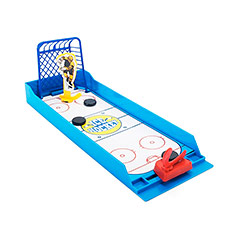
Mini Sport Games-the toughest kids to work with at home are the school-age kids because they are so busy with other things.  It's critical that if you are going to try and work with things at home with them that they are highly motivating and are matched with their interests.  There are a whole bunch of mini-sport games out there that can work on improving fine motor, manipulation, visual motor/perceptual and executive functioning skills (focus, attention, organization, etc.).  These games can also be used to work on improving social skills, especially to practice sportsmanship for kids who might struggle with winning/losing.  There could be lots of opportunities for role playing and working on strategies on how to deal with problems that might come up during sports.  Here are some of my favorites and all are priced under $10:
Fingerboard Ice Hockey
Football Fingerboard
Fingerboard Golf
FIKA Basketball
Mini Tabletop Basketball

Now that I have shared some of my favorite and affordable OT tools, I would love to hear from you about some of your favorites.  I know there are tons of things out there and would love to know what kinds of toys and products you use with your kids that get them to work without making it feel like work.  I am only a click away and love hearing from you all.