Showing posts with label games. Show all posts

Thursday, November 11, 2021

2021 Stocking Stuffers and Small Stuff Guide

This is always one of my favorite gift guides to put together because I feel like we are always looking for small gifts for kids whether it be an add-on to a larger gift or to be used as a motivator or prize for a job well done. There are some gifts on here that make the list year after year (Thinking Putty, chopsticks, on-the-go craft kits) but most of these are new this year. There are so many clever gifts out there that can be used for therapeutic purposes without the kids even knowing. I tried to include gifts for various ages and many of these are appropriate for kids of all ages and are not age-specific. 


1. Magnetic Connect 4-saw this and thought it was a fun game to play on a fridge or some other kind of magnetic surface. The goal of the game is the same as the original but you can work on increasing grasp strength and manipulation skills while also working on improving executive functioning skills such as focus, attention, planning, problem solving and organizational skills. For you city dwellers, the added bonus is that you don't have to figure out where to store another bulky game with lots of pieces. 

2. Nee-Doh Dohjee-squishy balls are all the rage these days and these have been a huge hit with my friends at the gym. What I love about these are that they come with a mini nee-doh ball and an outside animal/creature covering that you can mix and match with other Dohjees you collect. Great for increasing grasp strength and manipulation skills, improves bilateral coordination and hand-eye coordination in addition to having a small little fidget that will help calm down during stressful times. 

3. Silicone Bracelets With Charms Set-fun set of plastic bracelets that kids can personalize with a variety of charms (you must buy both separately). I am actually planning on ordering a bunch of these for the kids to make as a holiday gift from me this year. Great for working on improving fine motor, grasping and manipulation skills and also works on improving bilateral coordination and hand-eye coordination. I like that you can easily swap the charms out of your bracelet so if the child's interests change or they want to coordinate with the outfit of the day, they can. 

4. Tiny Ice Cream Kit-my sister bought my daughter the tiny baking kit and it was a huge hit with her and her friends. The kit comes with all the mini-sized tools you will need and an instruction book with 15 different tiny ice cream ideas. A great gift for an older kid (definitely suggest 8 or older like recommended on the packaging) who has decent frustration tolerance. This adorable set works on improving fine motor, grasping and manipulation skills and is a fabulous way to encourage executive functioning skills such as focus, attention and organizational skills. In the end, they have some adorable and tasty creations to show off. 

5. Busy Ideas for Bored Kids (Outside Edition)-after the last crazy 20 months, I am finding that so many kids don't really know what to do when they aren't on a device or being told exactly what to do. I am trying to encourage my own daughter to get outdoors as much as possible while the weather is still nice but oftentimes she will say she is bored or doesn't know what she should do. This deck of cards will help children choose fun activities to do outside with their peers. Hopefully they will use the cards as suggestions and add their own adventures to the suggested activities. 

6. Whatchamadrawit Game-this fast-paced drawing game encourages creativity, imagination and thinking outside the box. All you need is a paper, writing instruments and your imagination. This can definitely be played during family game night and I think the more players, the better! Before each round a judge is chosen....a card is picked and everyone has 60-seconds to draw what is on the card and the judge will pick his/her favorite and the winner gets the card. The person with the most cards at the end is the winner. Such a fun way to work on improving drawing and graphomotor skills and working on kids, especially those more rigid ones, to think outside the box and have fun. 

7. DIY Air Dry Clay Kit-I love using clay with my kids at work because it's such a great way to work on improving grasp strength and fine motor and manipulation skills but they often get upset when their creations get ruined. I have avoided using the oven bake clay since I don't have an oven to bake it at work and when I try and bring it home to cook, I end up ruining it. So I am loving this air dry clay from Ooly and how easy it is for kids to manipulate. Kids can make a creation (or practice making letters, numbers, shapes, etc.) and by the time they return the following week it's dry and ready to take home. 

8. On-The-Go Play Again Sticker and Game Set-reusable stickers can be a hit or a major miss but these sets from Ooly are an all-time favorite. There are three different sets to choose from: Daring Dinos, Sunshine Garden and Workin' Wheels and each set features a simple board game, a match and learn game, tic tac toe and a scene board where kids can use the stickers to use their imagination and create their own picture. These are so awesome for developing fine motor, grasping and manipulation skills, improves hand-eye coordination works on developing focus, attention, organizational and problem solving skills. The best part is that everything is easily stored within in the packaging so it's easy to take on the go to keep kids entertained while traveling. 

9. Dimple Pops-I love when a toy fad ends up actually being therapeutic and fidget toys have made a really big comeback since Covid. I'm not gonna lie....when I was doing a majority of my sessions remotely, I found myself needing something to keep my hands busy so I started using a fidget to help me focus. When I first saw all these pop-toys, I was instantly obsessed. I love that they have expanded and have kids of all ages in mind. What young kids don't realize is that while they are playing with this new fad toy, they are working on developing fine motor skills, hand-eye coordination, visual motor skills and so much more. These Dimple Pops are really great for the little hands who are working on finger isolation. 

10. Loopy Looper-this is a fidget toy for older kids (or grown-ups) and the fun thing about this particular one is that there are four different options with different challenges. 

Edge: Place your marble inside and find the perfect speed to keep it sticking to the rail.
Flow: Spin as slowly as you like to, taking time to feel the marble flow around the loop. Helps with focus, concentration and getting creative juices flowing.
Hoop: relax with a simple spin around the loop or launch into a quick-fire challenge by trying to land the ball inside the hoop! 
Jump: this Loopy Looper requires skillful spinning to get the marble through the gap. Once the child figures out the method, they can keep going as fast as they can. 

These are great for developing fine motor, grasping and manipulation skills, improve hand-eye coordination and encourages concentration, focus and a sense of calm. 

11. Mega Construx Pokéman-it's funny how Pokéman are still a thing today after all these years. I'm loving these construction sets that work on developing fine motor, grasping and manipulation skills, increased grasp strength, improves focus, attention, planning and organizational skills. There are 6 different characters to choose from or you can collect them all. 

12. Crazy Aarons Thinking Putty-I love everything about this putty but most love that the founder hires adults with special needs and trains them to have meaningful jobs. There is a giant variety of colors, styles and even some that smell! Putty is a great way to work on increasing grasp strength and manipulation skills and is also a great fidget for those moments when your child may have to return to remote learning. I like to hide small beads, coins or little animals in the putty to make it more motivating for tired little hands. 

13. Light Saber Chopsticks-couldn't resist adding these when I stumbled upon them. One of my go-to activities I give parents to do at home to work on improving grasp and manipulation skills is to use child-friendly chopsticks while eating. I still have a lot of older kids who need to work on this skill but want nothing to do with the babyish chopsticks. How much are older kids going to love these light saber/Star Wars inspired chopsticks?!?

14. Speks Geode Magnetic Sets-I picked these up on a whim a few months ago not realizing they would be a huge hit and now I am not sure who loves them more...me or the kids! Think Magnatiles on a much smaller scale. Great for on the go fun while also working on improving fine motor, grasping and manipulation skills. There is no right or wrong way to play with them and you can collect all the sets to create larger projects. 

15. Kids Made Modern Unicorn, Shark, Mermaid and Cosmic Necklace Kits-cute little on the go necklace making sets from an incredible company. I've been a huge fan of the quality of the materials that come in each of their kits. These necklace sets come complete with a charm, cord for stringing, 40 various beads and comes in a cute little tin storage case that can be used later as a trinket box or even use it to turn into a homemade ornament once your little crafter completes their necklace. 

16. Scribble Scrubble Pets-another fun little toy that will encourage even the most resistant writers pick up a marker and start coloring. My kids have loved coloring, designing and playing with these but they truly love scrubbing them clean and doing it over and over again. These are great for introducing younger children to coloring but also works on encouraging bilateral and hand-eye coordination, imagination and creativity skills and early writing skills. You can also work on improving tactile sensitivity by having them use soap or shaving cream on the scrub brush when scrubbing them clean. 

17. Mini Jenga Game-couldn't resist adding this to the list when I stumbled upon it. Jenga never fails to entertain kids and now you can take it on the go. Jenga is great for working on hand-eye coordination, focus, planning and organizational skills. If you want to add a fun little twist to the game, you can turn this into an ice-breaker game by writing questions on each block. 

18. Secret Decoder Ring-cute and simple way to encourage kids to work on handwriting in a fun way. Leave your kids messages that they have to decode using this ring. Each letter has a number that it coordinates with. Want your kids to do a chore? Write the message out in numbers and have your kids solve the mystery. Not only is this a fun way to work on handwriting, by twisting the ring you are working on improving fine motor, grasping and manipulation skills. 

19. Exploding Hand Soap-do you have kids who are resistant to hand washing? Try motivating them with these water bead like soap balls. They use the little spoon shaped like a hand to take one of the jar and then pop the bead that's filled with soap. Once the color disappears, they know they have washed long enough and can rinse. Love that we can add a little bit of sensory fun to a pretty boring but necessary task. 

20. Peanut Crayons-a great first set of crayons for little hands. These peanut-shaped crayons are a perfect size for early drawers and super well made so there is no fear of them breaking during use. The unique shape of these crayons makes it easier for little hands to grasp for greater ease with coloring. Made from all natural and non-toxic beanwax so parents don't have to worry if they accidently end up in the mouth. 

21. All of Us Crayons-inclusivity is a very important thing, especially in schools. This set of 8 crayons represents all colors of skin and encourages children to see the beauty of all colors and shades of skin. They are a perfect size to encourage a more proper grasp for little hands. Just a fun fact about these crayons: they made it onto Oprah's Favorite Things guide this year!

22. Uno Flip-this is one of my favorite new games this year and my older kids are loving it as well. I mean, who doesn't love Uno? This two-sided Uno game offers the traditional game of Uno with a special card that makes you flip the whole game over for a more competitive side of play with new challenges. Uno has always been a go-to game for me to work on developing executive functioning skills for my kids because it's a fun way to work on focus, attention, organization, planning and problem solving skills. 

23. Water Beads-when I pull these out for my kids, they are so excited! Loving this linked set that comes with thousands of water beads in various sizes. Water bead play is a wonderful way to encourage sensory play and exploration with little mess for grownups to clean up. I always give my kids cups, spoons and other toys to use when playing to encourage bilateral coordination, hand-eye coordination and focus and attentional skills. Sometimes I like to hide little plastic animals in the water beads and have them go on a hunt to save them which is always a big hit. 

24. Eraser Puzzles-these come highly recommended by my 11 year old daughter and her bestie. I love when a gift is not only practical but can also be used to reach developmental goals. Kids can work on problem solving, hand eye coordination, bilateral coordination and improves fine motor, grasping and manipulation skills. Each eraser has 5 pieces and you can mix and match. Be sure to check out your local toy stores to see what kinds of eraser puzzles they have....I have picked up the cutest animal and food eraser puzzles over the years for goody bags and prizes for my kids at work. 

25. Taco Cat Goat Cheese Pizza Card Game-not sure if you have noticed but I happen to have a thing for card games, especially ones that will engage the whole family. My speech therapist colleague Jacki Barredo  suggested this game to me and I have been sharing it since. This game sounds more complicated than it actually and can be enjoyed by the whole family. The deck is split evenly between 2-8 players. Each person takes a turn flipping a card face-up on a pile in the middle while saying the words "Taco", "Cat", "Goat", "Cheese", "Pizza" in that order. If the card in the middle happens to match the word being spoken, the players race to slap the deck...whoever is the last to slap the deck must take the whole pile and add to their set of cards. The person who gets rid of all of their cards first is the winner. 

26. Mini Twister Game-this is truly a dream recommendation for an occupational therapist! Twister has always been a favorite of mine because it works on so many developmental goals and this mini version makes me so happy. Such a fun way to work on improving fine motor and manipulation skills, finger isolation skills, motor planning and executive functioning skills such as focus, attention and problem solving skills. 

27. Animal ABC Stickable Foam Bath Shapes-I've always encouraged parents to make bath-time as meaningful as possible. Whether it be using shaving cream on the wall to practice drawing or writing letters, I believe that kids learn best at a young age through hands-on, sensory based play which is why bath time is a perfect time for early learning. Loving these extra adorable foam animal alphabet stickers that come with a mesh bag for easy storage. A perfect opportunity to not only learn letters, these are great for working on improving fine motor and grasping skills and to expand language skills and learning letter sounds. 

28. Unplugged Play: Grade School Edition-I'm constantly hearing that my 11 year old daughter is bored and doesn't know what to do (even though she has enough to keep her entertained for days on end) if she isn't allowed to be on her phone. I do think that after almost 20 months of everyone relying on technology, kids really are struggling making choices about what to do during their downtime. Since most kids don't want to be told what to do, I am loving the idea of giving them a book like that that has tons of choices for them to make. There are a variety of activities such as indoors vs. outdoors, solo play vs. playing with a friend/sibling but the common factor is that they don't require any technology. Be sure to check out the preschool edition for your younger kids. 

29. Boon Bath Time Pipes-going back to my love of making bath time as meaningful as possible, how cool are these suction cup pipes??? This 5 piece set can be used individually or can be connected to build a chain. Each shape has a unique feature which encourages sensory exploration, hand-eye coordination, bilateral coordination, cause and effect and so much more. These don't only have to be used during bath time....you can add them to a sensory bin with a variety of materials such as rice, beans, water beads and so much more. 

30. Twee Chalk-I love that there are some things that are ageless and timeless but also love that some of those things have become more advanced and exciting. I am totally obsessed with all of the gorgeous chalk creations from Twee (a Philadelphia based woman run company....woot woot). While my 11 year old daughter pretends to not care about these these things, she still get's excited when I buy a set of Twee chalk and insists I do not bring them to work. Living in Brooklyn and having a lot of sidewalk space so we have spent countless hours doing chalk drawing. Sidewalk chalk drawing is great for encouraging creativity and imagination skills and works on increasing upper extremity and hand strength. I encourage parents to have kids practice writing letters, numbers and shapes. 

I have tried once again to link some of my favorite local toy stores whenever I could as I have always found it very important to support our local businesses but even more so now. Many of the items listed above are ones that I have seen in most toy stores I have visited all over the place. And since are all hearing about shipping nightmares and problems with supply chain, why not take out some of the stress and support your local stores where you don't have to worry about toys arriving on time. If you are shopping for family members who are not local, find out their local toy stores and see if you can shop from there. If you are in the NYC area, be sure to check out the following stores: Lulu's Cuts and ToysLittle Things Toy Store, Norman and JulesAnnie's Blue Ribbon General StoreWest Side KidsStationary and Toy WorldMary Arnold ToysKidding Around Toys and Boomerang Toys

If you are looking for specific ideas for your kids or kids on your shopping list, please do not hesitate reaching out to me for suggestions. I have so many more thoughts on great gifts for the important toddlers in your life. I am only an email away at otmeghan@gmail.com and love to hear from and help in any way I can. 


Monday, March 23, 2020

What's App 2020 Quarantine Edition

During this crazy time, many of my families have reached out to me for tips on keeping their kids stimulated and their brains working. Over the years, I have found that there are some amazing apps out there that motivate our kids and I am going to share some of my favorites. Many of these have been on lists I have compiled in the past but many are new. I have also included some mindfulness and movement apps because while we are spending a lot more time inside right now, moving around and keeping active is critical to a child's ability to learn.

LetterSchool-not sure when I started using this handwriting app, but it is used multiple times per week. When I first discovered this app, it focused on learning upper and lowercase letters and numbers. In the past few years, they have added many other learning components such as shapes/pictures, cursive, sight words and more. I love how motivating and engaging this app is. Kids learn how to write letters through a 3-step process. As they finish each step, they get to watch the letter come to life in a really fun way.
Tap-tap the dots and watch the lines come to life to create the letters. The letter won't come to life unless you hit them at the right place and in the right order
Trace-now that you know where to start your letters, you will now trace/drag lines at the dots to form letters.
Write-this is a chance for your child to practice writing the letter they have practiced with fewer prompts. The chalkboard portion of this app is a great last step to learning how to write letters, numbers or shapes.

Avokiddo Thinkrolls-this is easily one of my favorite apps for the older children on my caseload and is great for working on developing executive functioning skills. At this point, there are several to choose from but I am partial to the original two and the most recent one, Space. I think it's important to say as much as I love this app, kids ask to play it all the time. The purpose of the game is to move your chosen character/Thinkroll through a variety of obstacles in brightly patterned mazes. As they move through the chapters, they are introduced to new objects with unique physical properties that they have to problem solve in order to move through the maze. For example, there may a balloon in their way; by looking at the maze, they see they can move the balloon over so it goes up in the air and pops via spikes on the ceiling. Each of the apps provides something unique, but all help the children work on problem solving, organizational skills, sequencing all while teaching them about science. Here are links to all four of the Thinkrolls games:
Thinkrolls
Thinkrolls 2
Thinkrolls Space
Thinkrolls: Kings and Queens

Endless Learning Academy-another engaging, motivating, interactive and fun educational app that provides comprehensive early learning preparation for children between ages 2 and 6 years old. Through thousands of interactive learning activities, children will learn their letters and numbers, how to read, vocabulary, phonics, spelling, counting, sequences and so much more. I have been obsessed with the Endless Alphabet game for years and it is nice to have all of the games in one place. The kids on my caseload have learned how to identify letters, learn their sounds, practice matching letters and so much more with just the Endless Alphabet Game. This app from Originator is one of those apps that requires an annual subscription but I think it is totally worth it considering you can use it for so many kids at different levels of learning.

Math Tango-another great app from Originator that helps learning math interactive and fun! This app is targeted at children between the ages of 5 and 10 years old and focuses on learning addition, subtraction, multiplication and division. Kids will progress through dozens of math lessons as they earn monsters and robots, complete missions and build fun worlds. There are over 500 math games with over 40 levels of play. Once they conquer the structured levels, they have the option of practicing their math skills through free play mode.

Sago Mini World-Sago Mini apps have been a long time favorite of mine to use with my littlest friends. This is definitely worth the subscription fee. There are 30 mini games for the kids to play that encourage open-ended play and critical thinking skills. Some of the skills that can be worked on with the mini games are color recognition, painting and storytelling skills, develop numeracy (counting, 1:1 correspondence, etc.), improve hand-eye coordination, visual motor and visual perceptual skills, encourage fine motor and manipulation skills and so much more.


Bugs and Buttons-this is an app that I have loved for years but wasn't available for a while because of the operating system on my iPad. Little Bit Studio has recently updated the app and I am so excited to introduce this game to a whole new batch of kids. I love how engaging and interactive the 18 educational games are and how they were on a variety of developmental skills. Some of the developmental skills that can be worked on are improving fine motor and manipulation skills, improves hand-eye coordination, visual motor and visual perceptual skills, number and letter recognition and SO much more. Other games from  Little Bit Studio are:
Bugs and Bubbles
Bugs and Buttons 2
Bugs and Numbers 

Toca Boca Pet Doctor-this app is still one of the most requested by my kids at the gym after years and years on my iPad. Kids get to help take care of 15 different animals who are sick or injured. Once they are all taken care of, they get to feed them their favorite foods. The bunny rabbit has booboos and needs bandaids so kids have to find the matching bandaid for each booboo. The dog has fleas so you have to catch them and put them in a jar. This game is great for working on developing fine motor and grasping skills, improves visual motor and visual perceptual skills and works on improving focus, attention and other executive functioning skills.

Little Fox Animal Doctor-another one of my favorite educational apps. And again, more importantly, a huge favorite with the kids that I work with. This game takes place in a magical doctor's office in a treehouse in the woods and lets children help 7 different adorable animals dealing with over 20 different ailments and injuries. There are so many great things about this game but I really like how it is different each time because you never know why each of the animals is waiting to see the doctor. In addition to being great for working on improving fine motor, visual motor, visual perceptual and executive functioning skills, it also works on improving speech and language skills. Before you start to take care of each pet, you have to watch a short video which explains why they are at the doctors office. I use this an opportunity for kids to tell a story. The other great thing about this app is that there are visual instructions they have to follow so they work on improving organizational and sequencing skills at the same time.

Pepi Doctor-this app by PepiPlay is another that has been on my must have app list since I discovered it years ago.  In this app, kids get to play the doctor to three different patients (Amber, Eva and Milo).  Each one of the kids has the same 5 ailments that need to be taken care of: a cold, a toothache, earache, broken bone and clean up cuts from a fall.  Each ailment requires them to complete several tasks in order for their patients to feel better.  Some of the tasks are putting the bone back together, brushing teeth, putting bandaids on scrapes and many, many more.  This app is great for improving visual motor and perceptual skills, hand-eye coordination, focus, attention and organizational skills.  It's also a great app to work on improving language skills.


Atomic Puzzles-puzzles are a huge part of my therapy sessions as they are great for working on so many different developmental skills. Our closet at Heads Up is filled with all kinds of puzzles but there isn't enough room to store as many as we would like, especially the larger interlocking puzzles our older kids use. Atomic Puzzles from one of my favorite app creators, Little Bit Studios, not only comes with almost 100 puzzles (3D/Live puzzles that come to life once completed, 2D puzzles with animated endings and mystery puzzles) but offers you the chance to make your own puzzles from your collection of pictures which can be so motivating and exciting for kids. This is a great app for working on improving visual motor and perceptual skills, focus and attention, organizational skills and working through frustration tolerance.

Toonia Differences-I love a good spot the differences game, especially for children who need to work on improving visual skills. Toonia Differences is a fun and motivating educational game where kids have to race the clock to spot the differences between two pictures. Kids have to visually track and focus carefully to noticed the 8 things that are different. It can be a flower is a different color, a character is facing a different direction or a change in the animals in pictures. There are dozens and dozens of puzzles to choose from with a variety of themes. In addition to working on improving visual skills, Toonia Differences works on improving executive functioning skills such as focus, attention, organizational skills and changing attentional skills.

Peg+ Cat Tree Problem-another great app from PBS Kids based on the adorable cartoon, Peg + Cat. This math app is intended for kids 3-6 years old and teaches them early math and problem solving skills. There are 50 levels to play and 10 worlds for them to explore. The activities become more challenging as they move through the games. If you have kids who are eager to learn early math schools, this is a great game for them. Also, I think that kids are way more motivated to learn more challenging skills from some of their favorite characters.

Trilo Spelling-when my daughter was finishing up kindergarten and preparing for first grade, I started to really panic about her reading skills.  I knew developmentally she was where she was supposed to be but living in NYC, academic expectations are higher.  I had spent a lot of time looking for the right app and each time I thought I had found it, she didn't like it.  So when we found this one, we were both thrilled!  In Trilo Spelling, there are five levels of spelling and reading fundamentals with each level introducing kids to a different letter blends.  Within each level, there are three different games/challenges they can play.  The graphics and monsters within the app are fun and friendly, motivating children to want to learn how to spell.  In addition to learning how to spell, children can work on improving executive functioning skills, hand eye coordination, visual motor and visual perceptual skills.

Dexteria Junior-this is a great app for working on developing fine motor and grasping skills with your little ones.  What I love about this app is that the creators worked with occupational therapists to make it.  Perfect for preschoolers and getting them ready for school.  There are three different games:
Squish the Squash-encourages children to use their pointer finger to squish squashes.  There are 15 levels for the kids to work through.
Pinch the Pepper-encourages children to use their thumb and pointer fingers to pinch the peppers.  Great for developing a fine pincer grasp which is important for the developing proper pencil grips later on.  There are 10 levels that become increasingly more challenging.
Trace and Erase-kids can learn how to draw various lines and shapes.  They first trace the lines and then use an eraser after.  Once they finish erasing the lines, they can take a silly selfie of themselves which my kids love.  I have my kids use a stylus with this particular game to encourage proper grasp patterns when holding a writing instrument.
In addition to what I have already mentioned, this game is great for working on hand-eye coordination, visual tracking, focus, attention and planning and organizational skills.


Social Emotional/Mindfulness/Movement Apps
I think that we are all looking for tools to help our children get through this crazy time. Making sure our kids get opportunities for movement, mindfulness and social emotional learning on a daily basis will be very important, not only for them but for all the grownupsThere has never been a more critical time to spend time focusing on social emotional learning. Here are some great apps, some recommended to me by colleague, Dr. Chelsea Deng, from Milestones Psychology.

Super Stretch Yoga-I've used this one over the years and the kids really enjoy it and are able to follow along with it pretty independently. Move, play and breathe as Super Stretch introduces you to his friends and their yoga poses. Using storytelling, animation and video examples, kids move through 12 yoga poses and earn a star after each one. Yoga is a great way to help kids work on build overall body strength and motor planning, encourages healthy habits and is a quick and easy way to help them to be able to focus and attend to other tasks.


GoNoodle Kids-this app is intended for classroom use and offers a tremendous resource of brain and body breaks during the school day. Now that your children will be working/learning from home and the amount of time we should spend outside is drastically limited, it's important for not only them, but you as their grownups, to have these scheduled breaks. I highly encourage parents to engage in some of these movement activities as they are working from home.

Daniel Tiger's Grr-iffic Feelings-Daniel the Tiger is a big hit with many of my younger children and I have been a fan of the PBS Kids apps I have used in the past. Right now, kids are surely feeling a lot of feelings and emotions but may not be able to express that effectively and this app is perfect to help them. There are four games:
Trolley Game-drive the trolley to discovered more than a dozen mini-games about feelings
Sing-Along-choose from 18 of your favorite Daniel Tiger songs, each one fully animated
Drawing Easel-use paints, crayons, stickers and more to express yourself
Feelings Photo Booth-take pictures of yourself that show lots of different feelings. Daniel will help you pose!
Kids can work on developing fine motor, graphomotor, visual motor, visual perceptual and hand-eye coordination skills while learning all about feelings and emotions.

Breath, Think, Do With Sesame-this fabulous app from Sesame Street's in Communities program is a great way to teach kids strategies on how to calm down, identify their feelings and work through their problem. Big feelings are totally normal but they can also makes kids feel scared. Kids will laugh and learn as they help a Sesame Street monster friend calm down through a variety of relatable situations: putting on shoes, saying goodbye to parents/caregivers, fixing a knocked down block tower, waiting in line or going to sleep. They play an active role in helping them choose what strategy would be best for the monster and then get to see the plan in action through a little video. 

Headspace for Kids-this subscription based app may be a really good investment, especially if your child is feeling overly anxious or worried right now. For professionals, the app is now free through the end of the year for anyone all public health providers! Headspace for Kids focuses on the following areas: Calm, Focus, Kindness, Sleep and Wake Up. For each area, there are three age groups to choose from (5 and under, 6-8 years and 9-12 years). Kids can practice breathing exercises, visualizations even try some focus-based mediation. Quirky cartoons engage kids while the calming voice of the co-founder of the app offers guidance throughout. 


Stop, Breathe, Think-here is another great app for younger children that works on self-regulation and teaches them about feelings and 
emotions and appropriate mediation strategies to help them work through different situations. Kids pick a mission to find a guided mindfulness activity based on how they are feeling right now (they can choose up to three emojis to express how they are feeling). Missions are between two and seven minutes and made up of expressive narration, sometimes with quiet background music and simple animations. Missions  demonstrated by different characters will lead you through mindful movements. 


Balloonamils-I've been using this app for a while with my younger kids, particularly when they have a whole lot of energy or when they might be feeling anxious. Kids blow into the microphone of the iPhone and watch a variety of balloon animals come to life. One the balloon is fully inflated (about 3 deep breathes), they shake the phone a couple of times and they watch the animal come to life. Once done, they can interact with the animal and see what kinds of tricks they can do. When they are done with that animal, they tap it a few times and he will pop. Not only great for helping kids to calm down but helps with hand-eye coordination, improves visual motor and visual perceptual skills and encourages grasping and manipulation skills. 

iPad Use Tips
I know and understand that there are many parents who have been resistant in using iPads/screens for learning but if used the right way, it is an incredibly effective and motivating tool. Below, I share some tips when using an iPad. 

JaqJaq Reusable and Erasable Paper-especially when doing handwriting or drawing apps, I always have kids practice with pen and paper immediately after practicing on the iPad. For example, when using LetterSchool, I have the kids practice the letter first and then have them write it again using "pen" and paper. In an effort to limit wasting of paper, I have recently begun using this amazing product. I like to use the ooly Dustless Chalk Crayons because they clean up quickly and easily and I have found that even my kids who have very weak hands have great success with these. 

Cosmonaut Stylus-for a variety of reasons, kids spend more time on tablets these days.  As with all things, as long as you don't overdo it, working on the iPad can provide a lot of benefits.  One of the things I recommend to all parents is that if they are going to let their kids use an iPad or other kind of tablet, be sure to have them use a stylus as much as possible to help develop fine motor and grasping skills.  I think this is especially important if your child is doing any kind of handwriting or drawing apps.  There are a lot of different stylus' to choose from but the Cosmonaut is my favorite.  It is a little pricier than some of the other ones made for children but it is far more durable.  I have had mine for several years and it still looks brand new.  The barrel of the stylus is thicker which encourages a tripod-like grasp when holding it.

Work Vertically-when possible, I have my kids use the iPad by propping it up so it is vertical (lean it against an easel). Working on a vertical surfaces is important for the following reasons:
-when you prop up the iPad on a vertical surface, it is in a better position and height which promotes visual attention
-improves hand-eye coordination
-encourages proper wrist positioning which helps with appropriate grasping on writing instruments
-strengthens shoulder, arm and and hand muscles

I have tried to include a variety of learning apps that will motivate your little ones and also tried really hard to choose ones that parents would have fun doing with their kids. This list is just a small sampling of the apps that I use so if parents are looking for certain apps, please do not hesitate reaching out to me. Also, I am always looking for new apps to use with the kids on my caseload so if you have any recommendations, please be sure to pass them along. I am always a click away and love hearing from all of you. 


Friday, November 22, 2019

2019 Holiday Gift Guide-Social Emotional Toys


One of the most important shifts I have witnessed in my career as on occupational therapist is the increased focus and attention put into social emotional development in children as young as preschool. While always an important issue, there has been a lot of research done in the last few years that show that teaching social emotional intelligence at an early age help children become more successful as they get older. With this increased attention to social emotional learning, there has also been an uprise in the products available to young children that help facilitate a better understanding of feelings, emotions, empathy and self-awareness.
In this portion of my 2019 Holiday Gift Guide, I share some of the amazing products out there that can help children learn about feelings and emotions, learn about empathy and kindness while working on improving fine motor and manipulation skills, improves visual motor and visual perceptual skills and can build confidence and self-esteem. 


Build a Robot Emotional Developmental Toy-teaching kids about emotions can be difficult, especially in the moment when they are feeling big feelings. This educational robot toy not only works on helping children learn about emotions but helps with developing fine motor, grasping and manipulation skills. This robot comes with one body and four interchangeable heads with different emotions. Great to use with young children when talking about their feelings. I love how each of the heads is a different shape and offers a variety of tactile experiences.


Emojinks Emoji Card Games-I have been a big Spot It fan for years and years and now that I run a social skills group, I tend to try and find games that have some kind of social emotional learning component. So try and imagine how happy Emojinks makes me! Very similar to Spot It, Emojinks is a game of speed where you try and be the first to find the matching Emoji. The nice thing about this game is that there are two different levels, beginner and advanced, so you can use it will all members of your family. Another great thing, the game is compact and easy to take on-the-go for non-screen-time entertainment. Emojinks is perfect to help your children learn about feelings and emotions while also working on developing focus, attention, visual motor skills, visual perceptual skills and visual tracking skills, improves fine motor and manipulation skills and works on social skills such as being a good winner/loser, taking turns and being flexible.


Make A Face-I first learned about this social emotional toy from my friends at Norman and Jules in Park Slope and fell in love with it immediately. Make A Face is a beautiful wooden toy that helps children create hundreds of expressions. Kids can use this 9-piece set to not only work on learning about emotions, feelings and expressions but also work on developing fine motor, grasping and manipulation skills and improves hand-eye and bilateral coordination skills. This toy shows kids how a simple change in the eye or mouth positioning can change the way someone sees them and makes them think about what they are feeling. While this toy was originally created for free play, Moon Picnic has realized that they could do more with it and have created a set of free downloadable flash cards that can add to the importance of playing with this toy.


eeBoo Pretend Play Stickers-pretend play is critical for the development of a variety of social skills. Through cooperative pretend play, children learn how to take turns, share responsibility, creatively problem-solve, be flexible with friends and can encourage creativity and imagination skills. I discovered the eeBoo Pretend Play Stickers last year and thought how awesome it was that these reusable stickers could be used with cardboard boxes (and we know how many of these we accumulate over the holiday season) and instantly transform them into a kitchen, spaceship or a car. Each set comes with four giant sheets of reusable stickers that will turn a plain cardboard box into a prop for kids to spend hours playing with. Not only are these great for developing social skills, they are great for working on developing fine motor and grasping skills and improve visual motor and visual perceptual skills. 

Penny For Your Thoughts Games-this is an amazing game that includes 80 hand-illustrated cards that were designed to increase connection between kids and adults, encourage more positive ways to communicate feelings and teach social and emotional skills that lead to success at home, school and various environments with friends. Using the cards, kids identify how they are feeling, other people who may be involved and learn to problem solve on how to get through some really challenging situations and deal with big feelings. 


Silly Street-this game began as a Kickstarter project a few years ago and I was really excited about. Silly Street helps children with developing social and communication skills, encourages creativity and builds confidence and resilience all through play! As an occupational therapist, I love how they have also incorporated ways to work on developing fine motor and grasping skills and improving visual motor and visual perceptual skills. I also love that this is a multi-sensory game that gets kids up and moving and encourages them to get their sillies out while building confidence, creativity, empathy, flexibility and resilience.


Lion In My Way-in this cooperative game by eeBoo, players work together to help the lion who is on a journey overcome hazards and barriers. By using a variety of objects, kids have to decide which one would be best to help the lion stay on his way. There are a tremendous amount of benefits from exposing children to cooperative games. First of all, by elimination the competition, the pressure of having to be the winner is taken away. These kinds of games also encourage kids to problem-solve together, accept ideas from others and be flexible in their thinking. Lastly, this game is great for encouraging communication skills with peers.


The Calm Mind Kit-I have been a fan of Rose and Rex for years and years so when I heard they were developing their very own product that worked on mindfulness and meditation, I was completely sold. This amazingly thought out kit was designed for children as young as 3 years old and can be used by grownups as well. The kit teaches techniques that can help people who are feeling anxious, have difficulty staying still and a variety of other common emotional struggles. This kit was thoughtfully created by childhood development and wellness experts to provide children with a variety of tools for emotional development and well-being that will help them learn now to focus, self-regulate and most importantly, build confidence and self-esteem. This well-crafted kit contains three handcrafted toys and a deck of beautifully illustrated Calm Mind Activity Cards that teach people how to use the tools provided. As an occupational therapist, I love how this kit helps children get into the right state of mind to work on more stressful or challenging activities by providing them with the tools. 


Feelings and Emotions Peg Doll Set-I love when a simple toy can help children develop a deeper understanding of their own emotions. This beautiful set of feeling peg dolls are perfect for pretend play while also helping children gain a better understanding of feelings and emotions. Included with the set are 5 birch discs with the feelings sad, calm, angry, happy and worried etched on them so kids can work on being able to match and discuss these emotions. These can be perfectly matched with the Hope Learning Toys The Friend Ship which is another beautiful homemade product that was developed to help children learn about their feelings. 


The Unworry Book-unfortunately, there are too many children who have a hard time talking about their feelings and anxieties. Having an outlet to express these feelings can be incredibly helpful for children (and their parents). The Unworry Book is filled with amazing activities for your anxious child. One of the most important things to do is allow children to express these feelings. This illustrated, write-in book is an unworry toolkit, for distracting you from any anxieties, calming you down, and providing a place to sort through your worries and thoughts. It includes a variety of activities, from things to write, color and design, to calm-down tactics and relaxation exercises.
Lets Talk! Conversation Starters-sometimes getting kids to talk about or express their feelings can be really difficult. I can't tell you how many times I have heard parents complain that they can't get their kids to talk to them about things that have to do with how they are feeling. This conversation starter kit from Lakeshore Learning is designed for children starting at age 5 but could easily be adapted for younger children. The box contains 50 open-ended questions that help parents and children talk about their feelings, ideas and so much more. Also great for working on conversation skills.


Guess It. Get It. Gumballs-this fun and engaging from Peaceable Kingdom teaches young children learn about feelings, develops empathy and encourages cooperation. Kids take turns spinning the spinner and then use the gumball-grabbing mirror to choose a matching color gumball. Look in the mirror and make the face that you think you might have grabbed. If you guess correctly, add the gumball to the scoreboard. If not, put it back in the gumball machine and try and remember what it is. In order for everyone to win, the players work together to collect a rainbow of gumballs before finding the stink face card. In addition to the social emotional learning that takes place, kids will also work on improving memory skills and improves visual motor skills. 

Putting together this gift guide was a particularly meaningful one for me. I run a social skills group for young children so I know how important having fun and motivating tools have helped them. All of these suggestions are ones that can easily be used in groups or at home. If you have any specific questions or are looking for something else, please reach out to me. I am only a click away and love hearing from you all. I would also love to hear from any of you if you have any wonderful tools that can be used to deepen children's social emotional intelligence. 

Monday, November 11, 2019

2019 Holiday Gift Guide-Game's On!

No matter how technologically advanced we get, there will always be a reason to have board games in your home. In my family, Rummikub and Boggle hold a special place during family game nights. To this day, countless hours are spent playing one of these games when a sister is in town to visit and the enjoyment I get from playing these games is hard to describe. In addition to the nice 1:1 time spend with my sister, I love how my brain is working and I feel 

There are a tremendous number of benefits of playing board games besides entertaining people. Here are just a few of the many benefits of board games:


1. Improving memory formation and cognitive skills- did you know that the hippocampus and prefrontal cortex of the brain are responsible for complex though and memory development? 


2. Stress Reducer-according to online research and surveys, there is a number of people who play games to unwind, relax and relieve stress. 


3. Encourage child development-board games help children develop their logic and reasoning skills, improve critical thinking and boost spatial reasoning. Increased focus and concentration are also linked to playing games. 

4. Improves developmental skills-playing board games help children develop a variety of fine motor and manipulation skills. Additionally, they can work on improving coordination, dexterity and grasp strength.


Below, I share a handful of games that I use at home and work, recommend to parents and think are just awesome. I have tried to share games that can be played as a family because I think it's so important to schedule time together because everyone has such busy and hectic lives. 


Mr. Mouth-I found this classic game a few weeks ago at Barnes and Noble and it has quickly become a favorite of so many of my kids. The goal of the game is pretty straight forward: the first player to feel all their flies to Mr. Mouth wins. 
Great for working on executive functioning skills such as focus and attention, improves hand-eye coordination, visual motor and visual perceptual skills and works on developing fine motor and manipulation skills and encourages executive functioning skills such as focus, attention, self-regulation, organization and self-monitoring.  


Morphy-this is one of my favorite games for the older kids on my caseload. The goal of the game is to collect the most number of discs by finding a disc with an attribute that is different. The game comes with 60 discs that have a color, pattern and a center circle hole that varies in size. Start with a green disc with stripes and a large center circle and you can move it to an orange disc with stripes and a large center circle or to a green disc with dots and a large center circle. Morphy is a fast-paced game that works on improving visual motor and visual perceptual skills, visual discrimination, visual tracking, pattern recognition, sequencing and improves executive functioning skills such as focus, attention, organization and self-monitoring. 


Colorforms Silly Faces Game-this is a game recommendation for younger children (age 3 and up) who are learning about colors, shapes and parts of the face. It doesn't require any reading which is perfect for the little members of your family. Silly Faces can be played with 2-6 players as they compete to build their silly face first. Kids spin the spinner and choose a Colorforms piece that goes with the category and stick it on their silly face card. There are some unexpected moments in the game which works on being flexible and resilient: if you land on the swap space, they must switch their card with another player who may move ahead in the game. Also, there is an un-stick space where you lose one of your face pieces and to replace it with another one. In addition to learning about shapes, colors and parts of the face, kids can work on developing fine motor and grasping skills, improve hand-eye and bilateral coordination skills all while encouraging kids to have fun, be silly and think outside of the box. 


Boom Blast Stix-I was introduced to this game by one of my occupational therapy colleagues a few Christmas' ago on a Facebook post and I immediately bought it. Warning...this is not a game for those who are easily startled! The point of the game is to clip the triangle-shaped pieces together and carefully stack them on top of each other (the container you store the pieces in doubles as a game board) without making them become undone and causing all of the other pieces to explode. This simple game works on so many occupational therapy skills such as improving fine motor and manipulation skills, increases grasp strength, encourages executive functioning skills such as focus, attention and self-regulation. 


Head to Head Scramble Pop-one of my go-to favorite games from when I began practicing has been Perfection. I have to be honest with you all that I still get startled every time the timer runs out and the pieces pop out. One of the things I have always wanted to change about Perfection is that it could be more than a one person game. So when I saw that Fat Brain Toys had a two-person version of this shape matching game, I was hooked! Think fast, move fast and scramble like mad to match all the shapes into the board first and before time runs out. Whoever gets all of their pieces into the board first wins the game. This game is ideal for working on improving hand-eye coordination, visual motor, visual perceptual and visual tracking skills, works on matching and identifying shapes and encourages executive functioning skills such as focus, attention, motor organizational skills and self-regulation.


Dirty Pig Card Game-I am a big fan of card games because they are portable and easy to take with you when you are on the go...like keeping kids entertained while at a restaurant or in a waiting room. This is an easy-to-lear game with the goal being to be the first player to dirty all your pigs. Each player begins with 3-5 clean pigs in front of them and three cards in their hands. Each turn a card is played. By playing a "Dirty Your Pig" card, one pig can be send into the mud. One of the pig cards is flipped over to show a dirty pig on the back. Rain cards clean all the pigs, even your own. Barn cards are used to protect your pigs from the rain and the lightening cards destroy the barns but lightening rod cards protect barns from lightening cards. Farmer cards are used to dirty someone else's pigs....he likes a clean pig! Pigs in a barn that are protected with a barn door are safe from the farmer. A pig in a barn, with a door and a lightening rod is completely protected! Great game to work on executive functioning skills such as focus, attention, working memory and organizational skills. 


Greedy Granny-this is a recommendation from my 11-year old niece who says . This non-battery operated game is a simple but hilarious game that will keep players engaged. The goal of the game is to swipe as many treats from Granny's tray without waking her up. Kids take turns taking a piece of food from the tray and then press the button all while hoping Granny won't wake up. The game is intended for kids as young as 4, but as my niece proves, fun enough to keep your older kids entertained as well. Great for working on social skills such as taking turns, being a good sport when winning and losing and can improve fine motor and manipulation skills. You can add a little challenge by having kids use tongs or kid's chopsticks to remove the treat from Granny's tray. 


What's In Ned's Head-this game has been around for ages and one of my all-time favorites to work on developing tactile recognition skills. Place the 16 silly objects in Ned's head, give it a good shake and then pass out a card face down to each player. All turn their cards over at the same time to see what object they have to find and quickly race to be the first person to find the correct object. In addition to the cards for the objects that come with the game, it includes 12 blank cards so you can add your own objects which is awesome because it keeps the game interesting and novel each time. In addition to working on tactile recognition skills, What's In Ned's Head can work on improving grasping and manipulation skills and encourages executive functioning skills such as focus, attention, organizational skills, improves frustration tolerance and works on self-regulation skills. 


Roller Coaster Challenge-this logic game is a huge hit with my older kids and great for working on developing executive functioning skills. Kids can build up to 40 different roller coasters ranging from beginner to super challenging. Kids pick a card and set up the posts and tracks according to each challenge. They then collect the remaining pieces (listed at the bottom of the card) and have to figure out where they all go in order to complete the roller coaster. Once the roller coaster is put together, they can test it out by running the car along the track. In addition to working on focus, attention, organizational skills, this game works on improving fine motor, grasping and manipulation skills, improves visual-spatial skills, logic, creativity, problem solving and critical thinking. One of the greatest things I see when kids successfully create the roller coaster is that their confidence and self-esteem seam to soar and it encourages them to try the more difficult challenges. I also like to make this game a social opportunity for kids to work together and collaborate on the actual building of the roller coaster. 


Pop The Pig-this is not one of my favorite games but it is one that makes the kids at work SO happy and actually works on a variety of developmental skills so felt like it had to be included this year. While we play it at the gym with just one kid and match it with some kind of gross motor activity (obstacle coarse, climbing up the incline mat to collect the burgers, etc.) it is actually intended to be a multi-player game (a fan favorite with my kids at The Meeting House Juniors). Players take turns rolling the die, finding a burger of the same color, turning it over to see the number, feed the pig and then push down on his head the correct number of times. With each pump, his belly will grow bigger and bigger until he pops! Even though the point of the game is to not be the one to make his belly pop, the kids want to be the one to make it happen! Pop The Pig works on number and color recognition, counting skills, works on improving upper extremity strength, grasping and manipulation skills and encourages executive functioning skills such as focus, attention, organization and self-regulation. 


Yeti Forgetti-one of my favorite games a couple years ago was another Yeti game, Yeti In My Spaghetti, so when this game arrived in my monthly Sensory TheraPlay Box (I will talk about this amazing subscription box in a later gift guide)  a couple of months ago, I was super excited. This newest game from PlayMonster is another hit with my kiddos at work. One of my favorite things is that it is small and doesn't take up a lot of space which is great for on-the-go entertainment. Kids hide the yetis and snow crab under the igloos and move them around so nobody knows which is which. They then draw a card and what they say-guess where a certain yeti is, peek inside the igloo, reveal a location or mix them up again. Try and remember where the yetis are to collect cards but do all you can do not find the snow crab or else you will lose all the cards you have collected. The player who collects the most cards is the winner. This is a great game for working on improving executive functioning skills such as focus, sustained attention, working memory, flexibility and self/emotional regulation. 


Emojinks-I have been a big Spot It fan for years and years and now that I run a social skills group, I tend to try and find games that have some kind of social emotional learning component. So try and imagine how happy Emojinks makes me! Very similar to Spot It, Emojinks is a game of speed where you try and be the first to find the matching Emoji. The nice thing about this game is that there are two different levels, beginner and advanced, so you can use it will all members of your family. Another great thing, the game is compact and easy to take on-the-go for non-screen-time entertainment. Emojinks is perfect to help your children learn about feelings and emotions while also working on developing focus, attention, visual motor skills, visual perceptual skills and visual tracking skills, improves fine motor and manipulation skills and works on social skills such as being a good winner/loser, taking turns and being flexible.


Friends and Neighbors: The Helping Game-Peaceable Kingdom has a variety of beautifully made games and are known for their cooperative games (meaning you need to work together and not strive for being the winner). Friends and Neighbors works on developing a better understanding of emotions and feelings in young children (recommended for children starting at 3 years of age) and encourages empathy. Kids will learn to read emotions and problem solve how to help a variety of people in different situations. Teaching our kids how to not only understand their own feelings and emotions but also recognize how others might feel is a truly important life lesson. In addition to being able to better understand feelings and emotions, Friends and Neighbors works on improving fine motor and manipulation skills, improves hand-eye coordination and encourages social emotional development. 


Heads Talk Tails Walk Card Game-this silly game of sounds and movement was recommended by NYC speech therapist, Jacki Barredo. Players try to match hidden head tiles to the correct body tiles. If they can't make a match, they have to try walk and talk like the mismatched tiles. Great for kids 3 and up and works on developing critical skills such as visual perception skills, reasoning skills, bilateral coordination and while encouraging gross motor development. 


Cauldron Quest-another fabulous recommendation from Jacki Barredo. This cooperative game is geared towards older children. The object of the game is to get the three correct ingredients into the cauldron before all six of the paths are blocked. The evil wizard has cast a spell to destroy the kingdom and you have the power to create a potion to break the spell but the kids must work together. The quest is to find the three correct ingredients hidden under the potion bottles and move them up the paths and into the cauldron before the wizards blocks all of the paths. I love cooperative games because kids must work together to achieve a common goal and not compete against each other. Some other social-emotional skills that can be worked on are making decisions together and being open to other people's ideas and recommendations. Also great for working on developing executive functioning skills such as focus, attention, working memory and problem solving. 


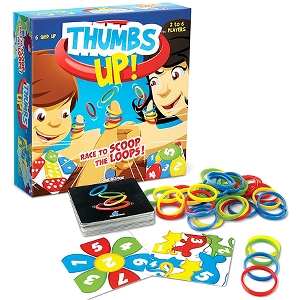
Thumbs Up-I just recently pulled this game out of my closet and so excited to be using it again at work. Thumbs Up is a fast-paced game where kids try to be the first to stack colored rings in the right sequence on their thumb. The game comes with colored rings and challenge cards. Each card has 4-7 pictures with numbers and colors and all the players race to be the first to stack the rings in the correct order. Whoever is the first to stack their rings collects the card; the player with the most cards at the end is the winner. This is a great game for on-the-go play because it can be thrown right into a bag. Thumbs Up is great for working on developing fine motor and grasping skills, finger isolation, improves hand-eye coordination, bilateral coordination, visual motor and visual perceptual skills and encourages focus, attention, motor planning and organizational skills. 


Googly Eyes-this is another recommendation from my niece, Lila and one that I know is a favorite of so many people. This family game is one that involves drawing while wearing zany, vision-altering google eye glasses. Your team tries to guess what you are drawing which results in some hysterics from all players. There are three different sets of lenses for the glasses ranging from a mild to pretty crazy alteration in your vision. Googly Eyes is great for working on improving graphomotor skills and encourages focus and attentional skills. 


I tried to cover a variety of different games on this post for kids of all ages and ones that could be good for families to play together. In a day and age where kids are spending more and more time in front of some kind of electronic device, I love that there are so many game options out there that can keep kids entertained while also working on developing a variety of skills. If you would like any other recommendations for games to work on specific skills, I have plenty more out there to share with you. I would also love to hear from any of you if you have games that are a huge hit with your kids or at work. I am only a click away and love hearing from all of you.